





1. What Are Putty Knives and Why They Matter in Every DIY Job?
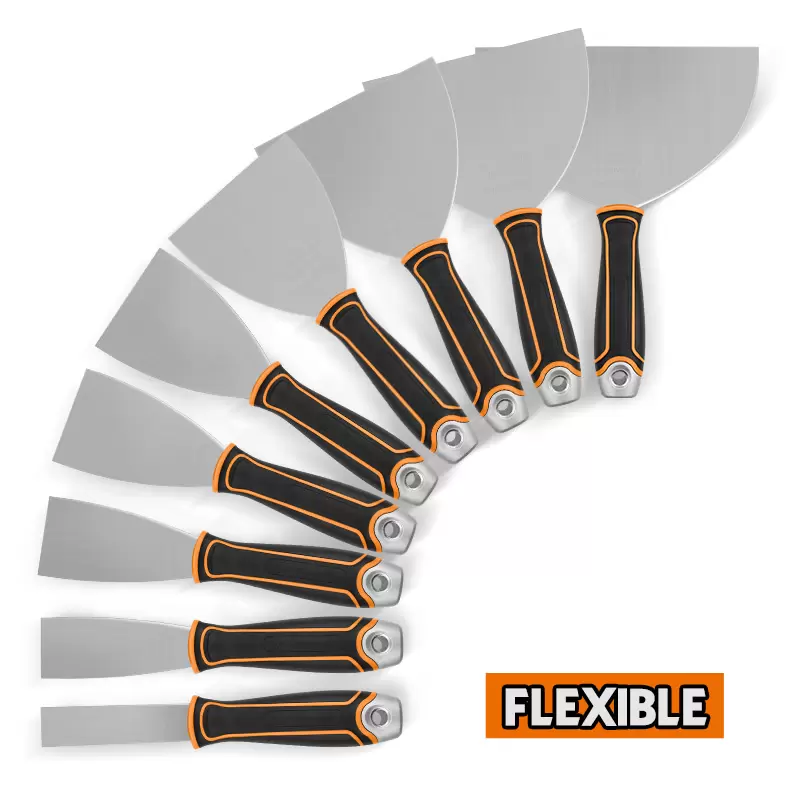
A putty knife is a flat tool used to spread and smooth compounds like spackle, joint compound, and wood filler. For global buyers, understanding blade thickness, flexibility, and material helps avoid specification errors. Explore a wide range of trusted Kittmesser from ROLLINGDOG to match your specific application needs, from precision 1″ blades to larger smoothing knives.
From a usage perspective, putty knives are widely applied across multiple scenarios:
- Repairing walls and filling holes
- Smoothing surfaces before painting
- Applying sealants and joint compounds
- Furniture repair and basic woodwork
This wide application makes putty knives a high-turnover item in the B2B supply chain, serving industries such as construction, renovation, furniture manufacturing, and retail DIY.
When sourcing, it is also critical to distinguish between putty knives and scrapers. Putty knives focus on finishing and smoothing, while scrapers are designed for removing paint, adhesives, or residue. A well-structured product catalog that clearly explains this distinction helps improve buyer trust and reduces after-sales issues.
1.1 Putty Knife vs. Scraper: What’s the Difference?
The difference between a putty knife and a scraper lies primarily in function and blade design.
Putty knives
- Designed for spreading and smoothing compounds
- Typically feature thinner, more flexible blades
- Used for filling cracks, leveling surfaces, and finishing work
Scrapers
- Built for removal tasks
- Feature thicker, rigid blades with sharper edges
- Used to remove paint, stickers, and old adhesives
In manufacturing terms, these design differences affect material choice, blade thickness, and hardness. For example, a metal putty knife is usually flexible and suitable for drywall or wood filler work, while a scraper requires a sturdier blade to withstand pressure.
Mislabeling these tools in product listings can lead to customer confusion. Clear product definitions and detailed specifications allow wholesalers and retailers to select the correct tools, ensuring better performance and higher customer satisfaction.For additional background on terminology and tool evolution, you can refer to the putty knife definition on Wikipedia.
1.2 The Most Common Uses of Putty Knives in Home Repair
Putty knives are essential in home repair because they help achieve smooth, even finishes quickly. The most common uses include filling nail holes, repairing cracks, smoothing joint compound, and applying wood filler. In woodworking, a putty knife for wood filler is often used to fill dents and scratches before sanding and finishing.
They are also used for applying caulk and smoothing edges in bathroom and kitchen projects. In drywall repair, putty knives are used to spread and level compound, making walls ready for painting. This versatility is why putty knives are a staple item for wholesalers and contractors.
For B2B buyers, offering a range of blade sizes and materials can satisfy both DIY users and professionals. High-quality putty knives can significantly reduce rework and improve the final finish.
2. How to Choose the Right Putty Knife for Your Project
Choosing the right putty knife involves evaluating three key factors that directly impact performance and user experience:
- Blade material
- Blade flexibility
- Handle design
These elements influence how smoothly the compound spreads, how much control the user has, and how comfortable the tool is during extended use. For sourcing teams, clearly defined technical specifications are essential to meet buyer expectations and reduce disputes.
2.1 Blade Material: Stainless Steel vs. Carbon Steel
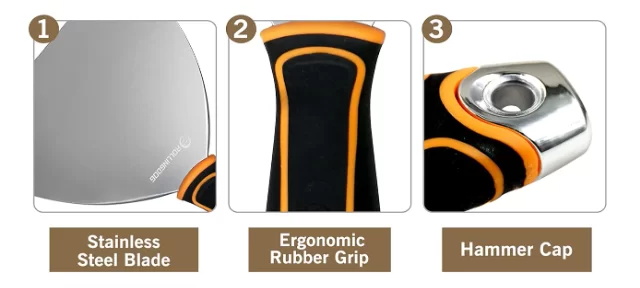
Blade material is a major factor in durability and performance. Stainless steel putty knives are rust-resistant and ideal for humid markets. They are easier to clean and maintain, which is important for professional users. Carbon steel blades are stronger and more rigid, making them better for heavy-duty work, but they require anti-rust protection.
In export trade, material choice also affects packaging and quality control. For example, carbon steel tools often need protective coating or rust-proof packaging to meet international standards. This difference affects both price and product positioning.For official guidance on safe tool handling and maintenance, refer to OSHA’s tool safety resources.

2.2 Blade Flexibility: When to Use Rigid vs. Flexible Blades
Blade flexibility determines whether the tool is better for finishing or heavy work. Flexible blades are ideal for smooth finishing because they adapt to surface curves and reduce ridges. Rigid blades are better for scraping and applying compound in thick layers.
In many markets, buyers prefer flexible blades for drywall finishing, while rigid blades are favored for renovation and paint removal. Offering both types in a set can improve customer satisfaction and reduce confusion.
2.3 Handle Types: Comfort, Grip, and Control
Handle design directly affects user comfort and control, especially for professionals who use the tool daily. Common handle types include plastic, rubberized soft grip, and wooden handles. Rubberized or ergonomic handles are preferred because they reduce fatigue and improve control.
Handle attachment is also important. Poorly attached blades can wobble, leading to tool failure and complaints. When sourcing, choose suppliers who can provide secure rivets or welding and reliable quality control.
3. What Size Putty Knife Should You Use? (A Practical Guide)
Size determines speed and precision. Putty knives range from small (1–2 inches) to large (6 inches and above). Large blades are best for broad areas and fast coverage, while small blades are used for precision work.A well-rounded product line should cover multiple sizes to meet different tasks.
3.1 Small Sizes (1–2 inches): Precision & Tight Spaces
Small putty knives are designed for detailed work like filling nail holes, cracks, and tight corners. They offer better control and reduce the risk of spreading compound beyond the target area. This makes them popular in woodworking and furniture repair.
Small sizes are often sold in sets with medium and large blades, giving buyers a complete solution. For B2B buyers, precision tools help reduce rework and improve finishing quality.
3.2 Medium Sizes (3–4 inches): Most Common Uses
Medium-sized putty knives are the most versatile and widely used. They are ideal for filling wall cracks, applying spackle, and smoothing surfaces. This size provides a good balance between control and coverage, making it suitable for both DIY and professional users.
For wholesalers, medium putty knives are often the best-selling items because they meet the most common repair needs. Offering high-quality medium blades can improve your catalog competitiveness.
3.3 Large Sizes (5–6 inches+): Big Jobs & Fast Coverage
Large putty knives are used for large-area applications like drywall finishing and plaster smoothing. A wide blade spreads compound quickly, reducing labor time and improving surface consistency.
A large putty knife is essential for contractors who work on big renovation projects. Large blades are also often paired with smaller ones for finishing details, providing a complete workflow solution.
📌 Table1: Putty Knife Size vs. Best Use
| Size (inches) | Best Use | Ideal Market |
| 1–2 | Nail holes, tight corners | Furniture & DIY |
| 3–4 | Wall cracks, general repair | Home repair & contractors |
| 5–6+ | Drywall finishing, large areas | Professional renovation |
4.Scrapers, Filling Tools, and Other Essential Accessories
Putty knives are only one part of a complete finishing toolkit. For global sourcing, buyers often bundle putty knives with scrapers, flexible filling tools, and multi-tool sets. This strategy increases average order value and meets diverse customer needs across renovation, woodworking, and construction markets.
In a complete kit, scrapers remove old paint or residue, while filling tools help achieve smooth surfaces without ridges. Multi-tool sets combine multiple blade sizes and functions, making them ideal for contractors and DIY users. When positioning these products in international markets, clarity is essential: many buyers confuse putty knives with scrapers, so clear labeling improves customer satisfaction.
When building a full finishing toolkit, also consider other painting accessories like brushes, rollers, and trays — explore our 10 Must-Have Paint Tools for DIY Projects for guidance.
4.1 Scrapers for Paint Removal: What to Look For
Key features to evaluate when sourcing scrapers include blade strength, edge sharpness, and handle durability. A scraper must withstand pressure without bending and should have a sharp edge for effective paint removal.
Common confusion in the market:
Many buyers search putty knife vs scraper , so product listings must clearly explain the difference. Putty knives are for smoothing; scrapers are for removing.
What to look for:
- Rigid blade (often carbon steel)
- Replaceable blades for long life
- Comfortable, non-slip handle
A scraper with these features performs well in renovation and professional markets, improving customer satisfaction and reducing returns.
4.2 Flexible Filling Tools for Smooth Finishes
Flexible filling tools are designed to create a smooth finish on uneven surfaces. Unlike rigid scrapers, flexible blades adapt to contours, allowing even distribution of compounds like joint compound and wood filler.
Benefits:
- Reduces ridges and uneven layers
- Requires less sanding
- Ideal for drywall and furniture repair
In export markets, flexible tools are often bundled with putty knives and sold as sets. This combination gives users a complete toolkit for both filling and finishing.
4.3 Multi-Tools and Putty Knife Sets: Are They Worth It?
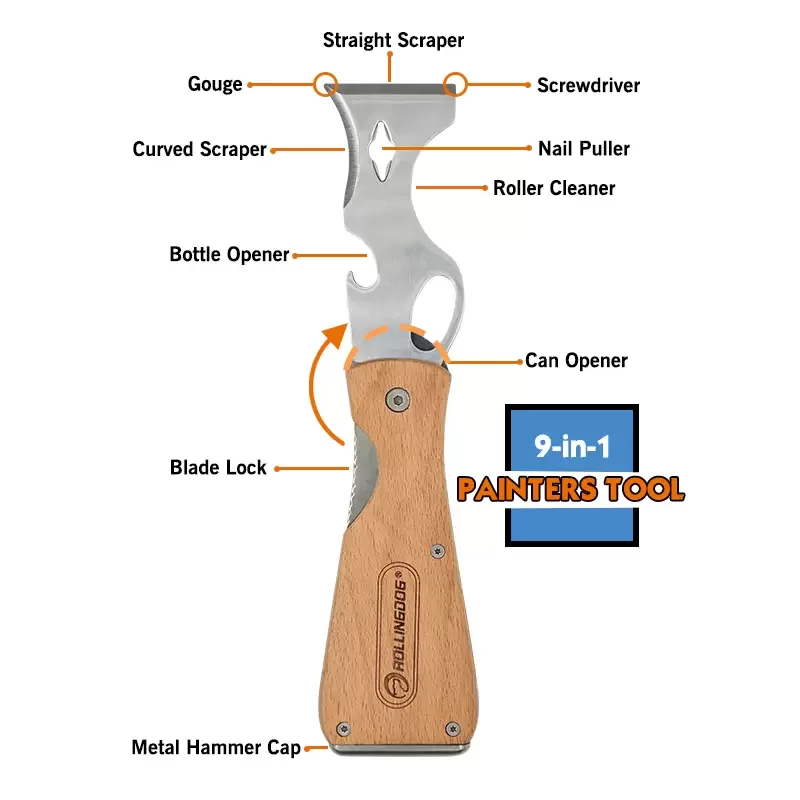
Multi-tools and putty knife sets are valuable for wholesalers because they offer versatility and convenience. Sets typically include multiple blade sizes and different flexibilities.
Pros:
- One purchase for multiple tasks
- Higher perceived value
- Better for contractor kits and DIY bundles
Cons:
- Low-quality sets can damage brand reputation
- Some users only need one or two sizes
A high-quality set should include both flexible and rigid blades, and clearly state the use of each tool. This helps buyers understand the difference between putty knives and scrapers and reduces confusion.
📌 Table 2: Tool Type vs. Best Use
| Tool Type | Best Use | Typical Market |
| Kittmesser | Filling & smoothing | DIY & contractors |
| Scraper | Paint removal | Renovation & restoration |
| Flexible filling tool | Smooth finishing | Drywall & wood repair |
| Multi-tool set | Multiple tasks | Retail bundles |
FAQ(Frequently Asked Questions)
Q1: What is the difference between a putty knife and a scraper?
A putty knife is designed for spreading and smoothing compounds like spackle or wood filler, while a scraper is used to remove paint, adhesive, or residue. Putty knives typically have thinner, flexible blades, whereas scrapers use thicker, rigid blades for stronger pressure.
Q2: How do I choose between stainless steel and carbon steel putty knives?
Choose stainless steel putty knives for rust resistance, easy cleaning, and humid markets. Carbon steel blades are stronger and more rigid, suitable for heavy-duty work, but require anti-rust protection or coating to prevent corrosion.
Q3: What size putty knife should I include in my product line?
A standard product line usually covers:
- 1–2 inches for precision work (nail holes, corners)
- 3–4 inches for general repairs (wall cracks, spackle)
- 5–6 inches and above for large areas (drywall finishing)
This range meets most DIY and professional needs.
Q4: Should I sell putty knives in sets or individually?
Both are viable, but sets often improve average order value and attract contractors or retail bundles. A high-quality set should include different blade sizes and a mix of flexible and rigid blades to cover more tasks.
Q5: What are the most common defects to check during QC?
Common issues include:
- Blade bending or warping
- Rust or poor anti-corrosion treatment
- Loose handle attachment
- Uneven blade edges or rough finishing
Strict QC reduces returns and improves supplier reputation.

Zoe Cen ist Marketingspezialistin bei ROLLINGDOG, einem weltweit führenden Unternehmen für professionelle Malwerkzeuge. Sie arbeitet daran, die Marke mit internationalen Distributoren und Einzelhändlern zu verbinden und die Innovationen von ROLLINGDOG bei Pinseln, Rollen und Zubehör hervorzuheben. Mit ihrem Schwerpunkt auf globalem B2B-Marketing hilft Zoe ihren Partnern, Zugang zu zuverlässigen, hochwertigen Malerlösungen für Profis und Heimwerker zu erhalten.