




1. My Experience: When a Customer Suddenly Rejected a Boar Bristle Brush
In international trade, small details can sometimes become important questions.
Several years ago, during discussions with a distributor in a religious-sensitive market, the conversation shifted from performance and pricing to something more specific:
“What exactly is the filament made of?”
It wasn’t a complaint — it was a clarification.
That moment reinforced something we already understood: in global B2B trade, material origin is not just a technical specification. In certain markets, it can influence purchasing decisions.
This article is not about judging materials. It’s about understanding market realities from a B2B perspective.

2. Understanding the Religious Concern: Is Using a Boar Bristle Brush Halal?
When buyers ask whether using a boar bristle brush is halal, they are usually referring to Islamic dietary and purity laws.
In Islam, pigs are considered impure (najis). While the most well-known restriction relates to consumption, interpretations vary regarding non-food applications — including tools made from pig-derived materials.
As a supplier, I am not in a position to give religious rulings. However, from trade experience, I can say clearly:
Some buyers consider it acceptable in non-consumable tools.
Others strictly avoid any pig-derived materials — even in hardware products like paint brushes.The difference often depends on:
- The country
- The distributor’s target customer base
- Whether the products are used in religious institutions
- Government or procurement regulations
In B2B trade, even uncertainty can create hesitation. And hesitation can delay or cancel orders.
2.1 Is It Haram to Use Boar Bristle Brushes?
This is one of the most common questions we receive, especially from buyers in Muslim-majority markets.
The honest answer is: there is no single universal position.
Interpretations may vary depending on scholarly opinion. Some Islamic jurisprudence resources, such as explanations published by IslamQA, discuss how pig-derived materials are treated under Islamic law, particularly in relation to impurity (najis) and material transformation. However, application in non-food industrial tools can differ by region and interpretation.
Some scholars argue that processed materials that are no longer in their original form may be treated differently. Others maintain a stricter interpretation and avoid pig-derived materials entirely, regardless of processing.
From a business perspective, what matters is not theological debate — it is buyer preference and market acceptance.
If your downstream retailers or contractors believe it is haram, then commercially, it becomes non-viable — regardless of performance advantages.
That is why material transparency is essential in export trade.

3. Why This Matters in B2B Trade
For distributors and importers, this issue is not theoretical.
It directly affects:
- Product positioning
- Market acceptance
- Brand reputation
- Regulatory compliance
- Risk of returns or complaints
In some cases, buyers may not initially notice the material origin. But once it becomes known — especially through labeling or competitor disclosure — it can create reputational risk.
As a manufacturer or sourcing partner, our responsibility is to prevent surprises.
3.1 The Risk of Losing Orders Over Material Origin
We have seen three typical risk scenarios:
1. Order cancellation before shipment
When buyers discover the material late in the process.
2. Customs or documentation issues
Some government projects or institutional tenders require material declarations.
3. Downstream rejection
Retailers or contractors refuse to stock or use pig-derived products.
For distributors, this can mean:
- Unsellable inventory
- Discounted clearance
- Damaged trust with customers
Compared to performance specifications like filament thickness or paint pickup capacity, material origin may seem secondary — until it isn’t.
Table 1: How Different Markets View Boar-Derived Materials
| Market Type | Acceptance of 100% Boar Bristle | Risk Level for Distributors | Recommended Strategy |
| Muslim-majority markets | Often restricted or avoided | High | Offer synthetic or blended alternatives |
| Government / institutional projects | Depends on procurement policy | Medium–High | Confirm material declarations in advance |
| ESG / sustainability-focused brands | Increasingly avoided | Medium | Provide synthetic options and transparency |
| Traditional contractor markets | Generally accepted | Low | Boar or blended options perform well |
| Oil-based specialty markets | Commonly accepted | Low | Natural or blended bristles recommended |
4. Pros and Cons of Boar Bristle Brushes (From a Professional Use Perspective)
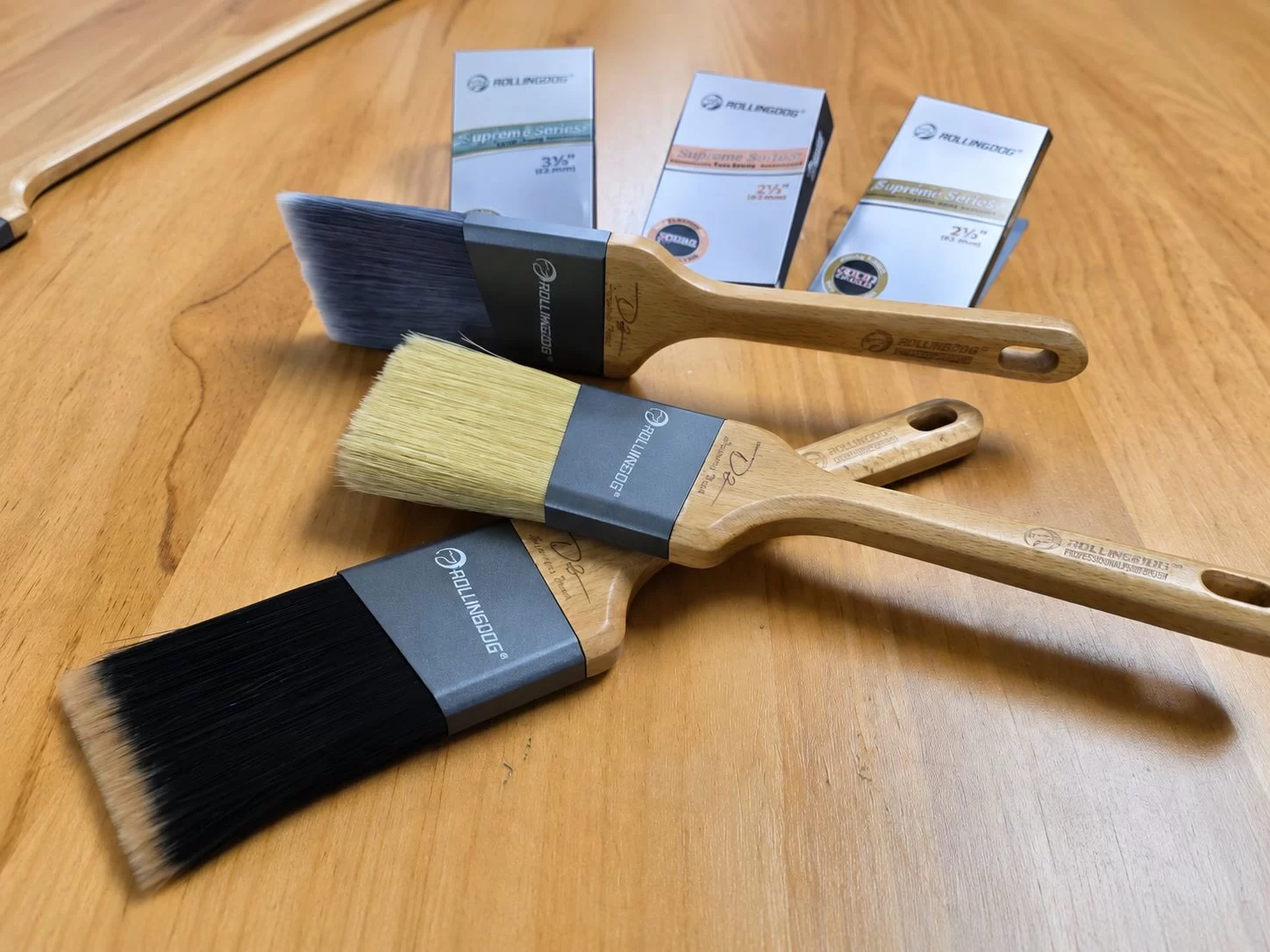
It’s important to be clear: boar bristle brushes are not “bad” products. In fact, they have strong technical advantages in certain applications.
The issue is suitability — both technically and commercially.
4.1 Why Should You Use a Boar Bristle Brush?
From a performance standpoint, high-quality boar bristle has several strengths:
Excellent paint pickup and release
Natural bristle has split ends (flagging), which allows it to hold more oil-based paint and release it smoothly.
Superior performance with oil-based coatings
For varnishes, enamels, and solvent-based finishes, many professional painters still prefer natural bristle.For a broader comparison between natural and synthetic options, you can read our detailed guide on natural vs. synthetic paint brushes.
Smooth finishing ability
When properly processed, natural bristles can produce a very even surface.
Traditional contractor preference
In some markets, experienced painters trust natural bristle for specific finishing jobs.If your target market primarily uses oil-based paints and does not have religious sensitivity concerns, boar bristle can be a strong product category.
4.2 The Limitations You Should Know
However, there are clear limitations:
Not suitable for water-based paints
Natural bristle absorbs water, becomes softer, and loses stiffness — which reduces control when applying latex or acrylic paints.
Cleaning requires more effort
Especially after oil-based use, solvents are necessary.
Material sensitivity in certain markets
As discussed earlier, religious concerns can override technical benefits.From a B2B standpoint, the question is not simply “Is it a good brush?”
The question is: “Is it the right brush for this market?”That distinction has helped us avoid future misunderstandings — and protect our customers’ distribution channels.
Table 2: Filament Structure Comparison for Professional Use
| Feature | 100% Boar Bristle | 50/50 or 30/70 Blended | 100% Synthetic |
| Oil-based paint performance | Excellent | Very Good | Good |
| Water-based paint compatibility | Poor | Good | Excellent |
| Paint pickup capacity | High | Medium–High | Medium |
| Ease of cleaning | Moderate | Easier | Easy |
| Religious sensitivity risk | High | Reduced | None |
| Market flexibility | Limited in some regions | High | Very High |
5. Is a Boar Bristle Brush Humane?
Another question that occasionally comes up — especially from European buyers — is whether using a boar bristle brush is humane.
In the brush industry, natural bristle typically comes as a by-product of the pork industry. It is not harvested from animals raised solely for brush manufacturing. The bristles are cleaned, sterilized, sorted, and processed before being used in production.
From a supply chain perspective, it is considered a secondary utilization of existing agricultural output.
However, market perception does not always follow supply chain logic.
Some buyers prefer to avoid animal-derived materials entirely, regardless of whether the sourcing is humane or industry-standard. This is particularly relevant in:
- Vegan-oriented retail channels
- Sustainability-focused brands
- ESG-driven procurement policies
- Private-label brands targeting younger consumers
In these cases, the question is not just religious — it is brand positioning.
As exporters, we have learned that understanding the values of the end market is just as important as understanding paint performance.
6. How We Now Approach Religious-Sensitive Markets
After encountering unexpected order resistance in the past, we changed the way we handle boar bristle products.
Today, we treat material origin as a strategic discussion point — not a small technical detail buried in specifications.
Instead of waiting for buyers to ask, we proactively address it.
This approach has reduced misunderstandings and strengthened trust with distributors.
6.1 Offering Synthetic Alternatives
The most practical solution is simple: offer options.
Modern synthetic filaments — such as PBT or PET — have improved significantly in performance. In water-based applications, they often outperform natural bristle.
For religious-sensitive markets, synthetic brushes provide:
- No animal-derived materials
- Greater compatibility with latex and acrylic paints
- Easier cleaning
- More stable pricing
In many projects today, synthetic brushes are not just an alternative — they are the default.
For distributors serving diverse regions, maintaining both natural and synthetic product lines provides flexibility without compromising performance standards.
6.2 Proactive Communication with Buyers
One of the biggest lessons we learned is this: assumptions create risk.
We now confirm the following before finalizing production:
- Target market country
- End-user channel (retail, contractor, government project)
- Whether any material restrictions apply
- Labeling requirements
If a buyer is unsure about downstream acceptance, we recommend starting with synthetic options.
Transparency builds trust. Silence creates surprises.
In B2B trade, surprises are expensive.
6.3 Why Product Line Diversification Matters for Distributors
From a distributor’s perspective, product diversification is not about adding SKUs — it is about protecting revenue.
When you offer:
- 100% boar bristle series
- 100% synthetic filament series
- Blended filament options
You gain the ability to:
- Serve oil-based specialist markets
- Enter religious-sensitive regions
- Adapt to regulatory changes
- Support private-label customization
More importantly, you avoid being locked into a single material strategy.
In today’s global trade environment, flexibility equals resilience.
7. Final Thoughts for Importers and Brand Owners
Boar bristle brushes are not inherently problematic. In the right market, they remain highly effective professional tools.
But in international trade, material origin can influence purchasing decisions more than technical specifications.
Religious considerations, ethical sourcing preferences, and brand positioning all play a role.
From our experience, the key is not choosing one side — natural or synthetic.
The key is understanding your market before you finalize your product mix.
For importers and brand owners, material transparency is not just about compliance.
It is about protecting your distribution channels, your reputation, and your long-term growth.And sometimes, the difference between a confirmed order and a cancelled one is not price — it is a single line in the material description.

Zoe Cen is a Marketing Specialist at ROLLINGDOG, a global leader in professional painting tools. She works on connecting the brand with international distributors and retailers, highlighting ROLLINGDOG’s innovation in brushes, rollers, and accessories. With a focus on global B2B marketing, Zoe helps partners access reliable, high-quality painting solutions for professionals and DIY users.